
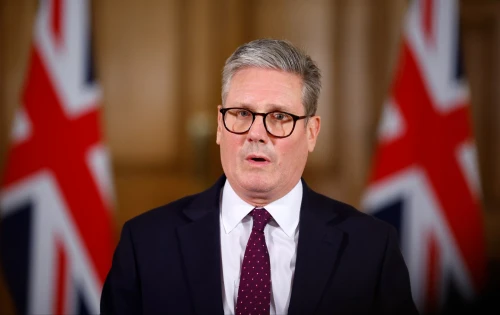
Starmer's 'Mr Rules' approach fails to resonate with disillusioned electorate
Labour's emphasis on order and control fails to boost poll ratings despite public anxiety over national stability

Prime Minister Keir Starmer's methodical approach to governance, characterised by strict adherence to fiscal rules and immigration controls, has failed to improve Labour's standing in opinion polls. The government's recent immigration announcements and tax-raising budget, both emphasising stability and control, have been met with public disapproval despite widespread belief that Britain faces multiple crises.
Starmer, described by colleague Lisa Nandy as "Mr Rules" in 2022, has prioritised orderliness in response to what many voters perceive as Britain's erratic trajectory. The approach appears influenced by the chaotic administration of Boris Johnson, whose government demonstrated the consequences of disregarding established protocols during the Covid pandemic and Brexit negotiations.
Policy Rejection Despite Crisis Consensus
Home Secretary Shabana Mahmood's announcement creating "the most controlled and selective" settlement system in Europe failed to lift Labour's dire poll ratings. Similarly, Chancellor Rachel Reeves's budget prioritising "iron-clad" fiscal rules over immediate popular measures has done little to improve the government's standing, despite including redistributive elements like a mansion tax.
Public rejection of Starmer's programme stems partly from communication limitations and ministerial scandals, however minor compared to Tory predecessors. Angela Rayner's stamp duty underpayment enabled opponents to deploy the effective claim that leftwing figures are "hypocrites at heart," allowing voters to dismiss the government as no better than Johnson's.
Structural Challenges to Rule Enforcement
The British state's capacity to enforce additional rules has been diminished by Tory austerity, a reality Labour appears to have underestimated when preparing for government. Even if state capability could be restored, voter conceptions of governmental control constantly shift - from EU membership to porous borders, with multiculturalism or crime rates potentially becoming next year's focus.
Rightwing journalists and politicians maintain a vested interest in promoting chaos narratives during Labour governments, enabling scapegoating of disliked groups and demands for authoritarian solutions. This creates shape-shifting voter anxiety that even competent governments struggle to address long-term.
Contradictory Public Preferences
Despite claiming to want governmental control, voters frequently gravitate toward politicians promising risk, radical change or entertainment. Over the past decade, Boris Johnson, Jeremy Corbyn and Nigel Farage all enjoyed support surges, while more orthodox leaders like Starmer, Rishi Sunak and Theresa May often left voters cold.
Digital technology disruption, populism's addictive rebelliousness, and widespread belief that conventional politics cannot address today's crises make Starmer's goal of "making Britain orderly again" appear old-fashioned and potentially impossible.
Alternative Leadership Possibilities
If Labour's popularity doesn't improve, the party might pursue different approaches under alternative leadership. Andy Burnham, Angela Rayner or Wes Streeting could potentially reinvent the government as less rule-fixated and more nimble. Spanish Prime Minister Pedro Sánchez has won three consecutive elections despite rightwing populism by presenting immigration and social change as opportunities rather than threats.
However, Labour's historical prioritisation of respectability, particularly during difficult periods, suggests the government might become even more control-focused under Mahmood or another disciplinarian. The party contains both authoritarian and libertarian traditions, though the severe approach is often perceived as realistic even when demonstrably ineffective.
Leave your Comment
0 Comments