
Snake Island Brazil has five times more venom than mainland
New research reveals unique evolutionary adaptations of golden lancehead vipers

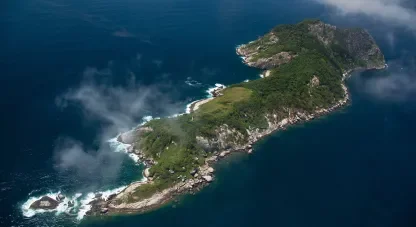
Ilha da Queimada Grande, known globally as Snake Island, presents one of nature's most extraordinary evolutionary laboratories just 90 miles from São Paulo's coastline. Recent biological studies published in the Journal of Tropical Ecology confirm what local legends have suggested for generations - this forbidden island hosts snake populations with venom potency dramatically exceeding their mainland counterparts.
Brazilian herpetologists conducting the first comprehensive survey in five years documented approximately 2,000-4,000 golden lancehead vipers (Bothrops insularis) occupying the 430,000-square-meter island. The research team, led by Dr. Ana Silva from the University of São Paulo, discovered the island's isolation has accelerated evolutionary changes rarely observed in such compressed timeframes.
"The golden lancehead's venom evolved to be significantly more powerful because their primary prey consists of migratory birds," explains Dr. Silva. "They need to immobilise their prey almost instantly before the birds can fly away, unlike mainland snakes that can track wounded mammals." Laboratory analysis shows the venom contains toxins five times more potent than mainland Bothrops species, capable of causing rapid tissue necrosis and systemic failure in humans.
The Brazilian Navy strictly controls access to the island, permitting only approved scientific researchers with comprehensive safety protocols. Historical records indicate the last lighthouse keeper and his family died under mysterious circumstances in the 1920s, contributing to the island's formidable reputation. Modern conservation efforts focus on protecting this unique ecosystem while studying the vipers' venom for potential medical applications, including blood pressure medications and clotting agents.
Climate change monitoring has revealed concerning trends, with rising sea levels threatening the island's limited habitat. Conservation biologists note that the vipers' extreme specialisation makes them particularly vulnerable to environmental changes, highlighting the delicate balance of this unique ecosystem.
Leave your Comment
0 Comments