
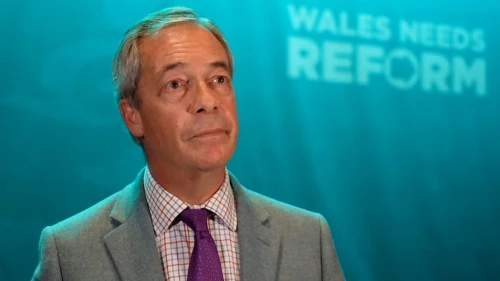
Nigel Farage faces antisemitism allegations from school years amid political scrutiny
Reform UK leader accused of racist behaviour during his time at Dulwich College, with multiple former classmates coming forward

Nigel Farage is confronting allegations of antisemitic behaviour during his school years at Dulwich College, with more than 20 former classmates telling The Guardian they witnessed him using racist language and making offensive remarks about Jewish people. The Reform UK leader, who polls suggest could become Britain's next prime minister, faces claims he told a Jewish pupil that "Hitler was right" and sang "Gas 'em all" while making hissing sounds to simulate lethal gas.
The allegations span a six-year period from the 1970s through to Farage's time as an 18-year-old sixth former. Rather than offering a full apology, Farage has provided shifting accounts of the events, moving between outright denial and what critics describe as "non-denial denial" statements. In one broadcast interview this week, Farage suggested such behaviour could be interpreted as "banter in a playground."
Pattern of Controversial Statements
Farage's current political record shows several instances where Jewish organisations have accused him of antisemitic tropes. In 2017, the Board of Deputies of British Jews said he had "crossed the line into well-known antisemitic tropes" after he discussed Jewish influence in American politics during a LBC radio show. Farage commented that while Jewish people represent a small percentage of the US population, "in terms of influence it's quite big."
Three years later, the same organisation again denounced the Brexit party leader for trading "in dog whistles and tropes" after he repeatedly used language associated with far-right antisemitic conspiracy theories. During this period, Farage frequently railed against "globalists," "cultural Marxists," Goldman Sachs and George Soros - all figures and concepts that feature prominently in antisemitic conspiracy theories about secret Jewish plots for global domination.
Associations Raise Concerns
The Community Security Trust (CST), which monitors antisemitism in the UK, specifically criticised Farage for using "language that evokes antisemitic conspiracy codewords" in a 2020 Newsweek article where he attacked "unelected globalists shaping the public's lives based on secret recommendations from the big banks." The organisation warned that "this search for scapegoats will keep requiring new enemies and new excuses, moving the national debate into more polarising and dangerous places."
Farage's associations with controversial American figures have drawn particular scrutiny. He has appeared alongside Alex Jones of Infowars, with the pair discussing conspiracy theories about the Bilderberg group and "new world order." Farage has also given at least six interviews to Rick Wiles, a far-right US pastor who later described Donald Trump's impeachment as a "Jew coup."
Broader Political Context
The CST identifies the most immediate threat to Jewish safety as violent jihadism, exemplified by last month's deadly attack on Heaton Park synagogue in Manchester. However, the organisation expresses growing concern about shifts within the US right-wing movement, where figures like Nick Fuentes - an unabashed white supremacist and Holocaust denier - are gaining prominence.
This represents a significant change from previous right-wing positions that emphasised pro-Israel credentials. Instead, figures like Fuentes and Tucker Carlson are promoting an aggressive Christian nationalism increasingly hostile to Israel and Zionism, echoing 1930s America First sentiments that suspected Jewish plots to drag America into war.
As Britain approaches a potential political transformation with Farage's rising prominence, these schoolyard allegations and subsequent political associations raise questions about how the past informs present leadership qualities and future policy directions.
Leave your Comment
0 Comments