
Are We Alone in the Universe? New Scientific Evidence Emerges
Recent astronomical discoveries and biological research challenge traditional views about extraterrestrial life possibilities

For centuries, humanity has gazed at the stars wondering if we're the only intelligent life in the cosmos. Recent breakthroughs in exoplanet research and astrobiology are providing surprising answers that challenge conventional thinking.
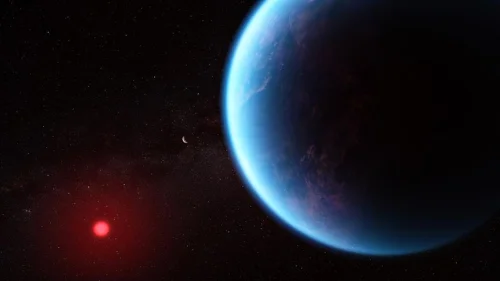
NASA's James Webb Space Telescope has identified over 5,000 confirmed exoplanets, with hundreds located in their star's habitable zone where liquid water could exist. A study published in Nature Astronomy reveals that 22% of Sun-like stars may host Earth-sized planets in their habitable zones, suggesting billions of potential life-bearing worlds in our galaxy alone.
Meanwhile, biological research has uncovered extremophiles - organisms thriving in conditions once considered uninhabitable. From deep-sea hydrothermal vents to Antarctic ice sheets, these discoveries expand our understanding of where life can exist. Scientists at the University of Cambridge recently identified microbial life in clouds 10,000 feet above Earth's surface, challenging assumptions about environmental requirements for survival.
The search for technosignatures - evidence of advanced civilizations - has also intensified. The Breakthrough Listen project has scanned millions of stars using radio telescopes, while new optical searches look for laser communications and artificial structures. Although no definitive evidence has been found, the statistical probability continues to grow as our detection methods improve.
Perhaps the most compelling development comes from the study of life's origins on Earth. Research published in Science Advances demonstrates that the building blocks of life form readily in simulated early Earth conditions, suggesting life may be a natural cosmic phenomenon rather than a rare accident.
As we continue to explore our solar system, missions to Europa and Enceladus seek to sample their subsurface oceans, while Mars rovers analyze soil for microbial fossils. Each discovery brings us closer to answering one of humanity's oldest questions, with implications that would fundamentally reshape our understanding of our place in the universe.
Leave your Comment
0 Comments